Renter Friendly Window Film: What Comes Off Clean and What Cracks Glass
Some links here are affiliate links. If you buy through one, I earn a small commission at no cost to you — full disclosure at the bottom.
The unit was on the third floor, west-facing, and the tenant had been there two years without a single complaint. She left it spotless. Baseboards wiped, oven degreased, not a nail hole anywhere. I was already mentally writing “full refund” on the form when I got to the living room window and saw a crack running from the middle of the lower pane out toward the frame in a long, lazy curve. No impact point. No star pattern. Just a line that looked like it had been drawn.
She swore nothing hit it. She was telling the truth. What she had done, eighteen months earlier, was apply a dark reflective privacy film to the inside of that window because the afternoon sun was cooking her couch. The film was still on there, perfectly applied, no bubbles. It cost her about twenty-two dollars. The insulated glass unit cost four hundred and ten to replace, and because the manufacturer voids the glass warranty when aftermarket film goes on, the landlord couldn’t pass it upstream. It came out of her deposit, and then some.
That window is why I get twitchy when I read roundups about renter friendly window film. Almost every one of them measures the same single thing: does it peel off clean, or does it leave glue behind. That’s a fair question. It’s just not the expensive one.
The residue question is a decoy
Adhesive residue on glass is annoying and it is fixable. A little heat, a little solvent, twenty minutes of patience, and the pane looks like nothing ever happened. I’ve released deposits on units where the tenant left tacky corners on four windows, because tacky corners are a cleaning line item, not a damage line item.
Thermal stress cracking is a different animal, and it’s the one nobody explains to renters.
Here’s the mechanism, stripped of jargon. Glass expands when it heats. Applying a dark or reflective film to the interior surface makes the pane absorb noticeably more solar energy than it was designed to — the film traps heat in the glass instead of letting it pass through into the room. On a double-pane window, the center of the pane sits in full sun and gets hot. The outer inch or so, tucked under the frame and in contact with the spacer and sealant, stays comparatively cool. Now you have two zones of the same sheet of glass trying to be two different sizes at once. Glass doesn’t bend. It relieves that stress the only way it can, which is by splitting.
The part that catches people out is the timing. The crack rarely shows up during the heat wave. It tends to appear on the first cold snap after a hot stretch, or on a sunny morning in October when the outside air is forty degrees and the inside surface is climbing. Nobody’s in the room. Nobody touched it. You wake up and there’s a line in the window.
And then there’s the second layer, which is honestly the part that decides whether this costs you a hundred dollars or your whole deposit. Most insulated glass manufacturers — Andersen, Pella, Milgard, and plenty of the builder-grade outfits — write aftermarket film into the exclusions on their glass warranty. Some allow specific low-absorption films with written approval. Most just void it. So when that pane fails, the landlord calls the window company, the window company sees film on the glass, and the claim dies right there. The repair becomes an out-of-pocket expense, and it lands on the person who put the film up. A gallon of paint is forty bucks. A sealed double-pane unit, installed, runs a few hundred at minimum and considerably more if it’s an odd size or a casement.
That’s the whole risk calculus in one sentence: this is the rare rental modification where the worst case isn’t a cleaning fee, it’s a replacement invoice.
Static cling and adhesive film are not the same product
They’re sold under the same two words, they sit next to each other on the same search results page, and I have not found a single roundup that draws a hard line between them. They’re barely related.
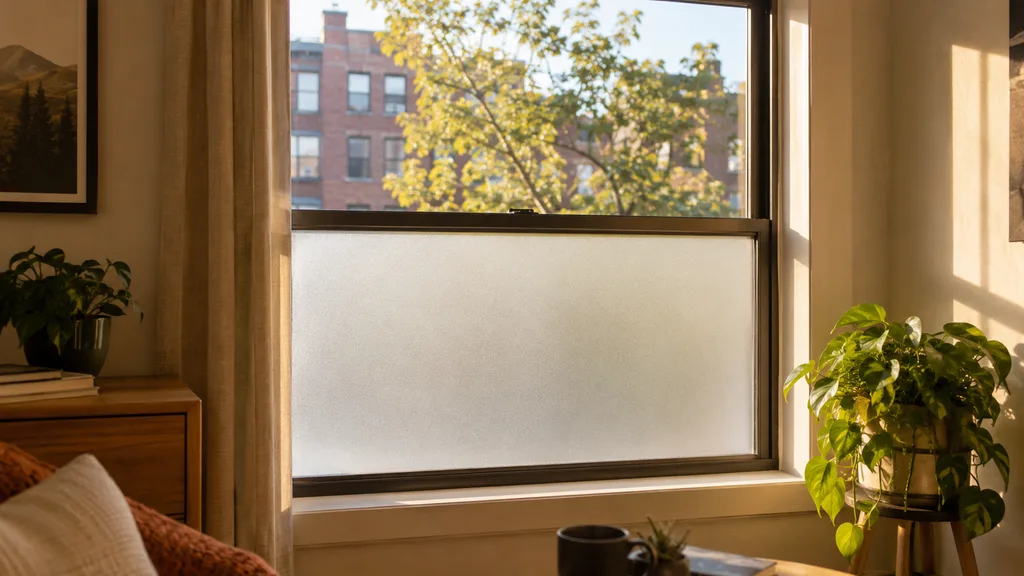
Static cling film has no adhesive at all. It’s a soft vinyl sheet that holds onto glass through surface tension and electrostatic attraction — you wet the pane with soapy water, squeegee the sheet on, and it stays. It comes off with a fingernail in the corner and a slow pull, leaves nothing, and can often be reapplied a second or third time if you keep the backing sheet. Because it’s typically frosted rather than tinted or metallized, its solar absorption is low. It’s doing privacy work, not heat work.
Adhesive film is a polyester laminate with a pressure-sensitive glue layer, and it’s the one that actually performs. Real heat rejection numbers, real glare reduction, sometimes real UV blocking. It also bonds permanently enough that removal is a heat-gun-and-patience project, and the dark and mirrored versions are exactly the ones that raise pane temperature.
Which means the default answer for a renter is almost always static cling, and the interesting conversation is about the narrow set of cases where it isn’t. Not because cling is better — it isn’t, on performance — but because the failure mode of one is “I wasted an afternoon” and the failure mode of the other is a line item you’ll be arguing about over email in six months.
Know your window before you buy anything
Three checks. Ten minutes total, no tools, and they determine everything that follows. Do them before you add anything to a cart.
The pre-purchase glass check
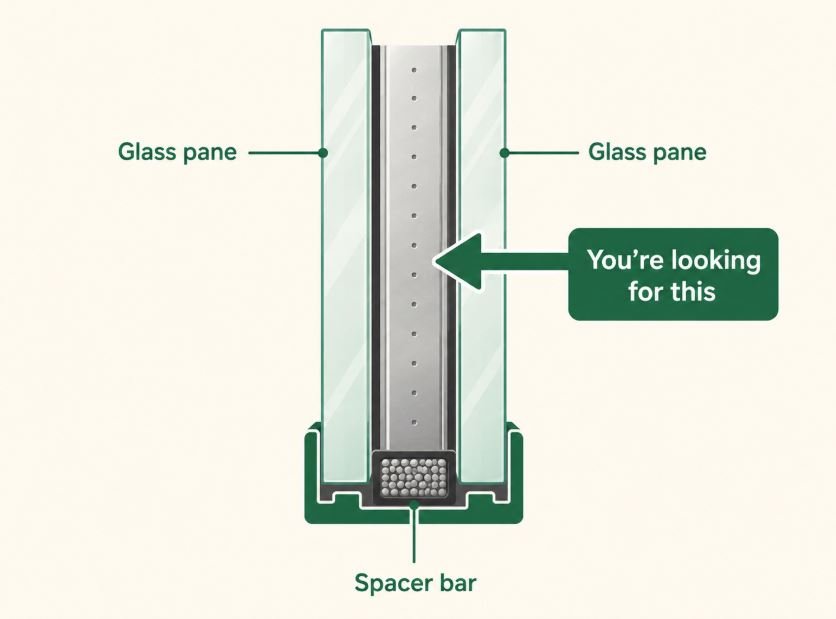
- Single pane or double pane? Look at the window edge-on where the glass meets the frame. If you can see a thin gray or metallic strip sandwiched between two sheets — that’s the spacer bar — you’ve got an insulated double-pane unit. If the edge-on view is ambiguous, hold a small flashlight or your phone light at an angle against the glass at night and count the reflections. Two reflections means single pane. Four means double. Double-pane is where thermal stress risk multiplies, because the sealed air gap keeps heat from escaping to the outer pane.
- Which direction does it face? Open your phone’s compass and stand at the window. South and west exposures take the long, low afternoon sun, which is when glass surface temperatures peak. Most of the thermal cracks I saw in five years of walkthroughs were on west-facing glass. North and east windows are meaningfully more forgiving.
- Any existing chips, nicks, or edge damage? Run your fingertip slowly around the perimeter of the pane where it disappears into the frame, and look closely at the corners. A tiny nick at the edge is a stress concentrator — it’s where a thermal crack will start, because that’s the weakest point in the sheet. If you find one, photograph it now with the date visible, and don’t put film on that window at all.
Put those three answers together and you get one hard rule that I’d hang the rest of this article on: double pane plus a south or west exposure means no dark or reflective adhesive film, full stop. Not a lighter version of it, not “just on the bottom half.” Go to frosted static cling or to a fabric solution that never touches the glass. If you’re single-pane — common in older buildings, prewar walk-ups, a lot of Midwest housing stock — you have real room to work with, because a single sheet with air on both sides sheds heat far more evenly.
Comparing your renter friendly window film options by deposit risk
| Option | What it actually does | Works on | Deposit Risk |
|---|---|---|---|
| Frosted static cling | Privacy, soft light diffusion | Any flat, clean glass | Low |
| Decorative / stained-glass cling | Privacy plus visual character | Any flat, clean glass | Low |
| Dark or mirrored adhesive film | Serious heat and glare rejection | Not double pane. Not sunny exposures. | High |
| Light, low-reflectivity adhesive film | Modest UV and glare control | Single pane, or north/east double pane | Moderate |
| Insulating shrink film kit | Winter draft and heat-loss control | Any window with a sound frame | Low |
| Blackout curtains on a no-drill rod | Full darkness, full privacy | Any window with usable frame depth | Low |
| Freestanding privacy panel | Privacy with zero glass contact | Anywhere with 6 inches of floor | Low |
What is the safest window film for renters?
The safest option for renters is frosted static cling film, which uses no adhesive at all and peels off leaving nothing behind — making it the default choice for privacy on any window type. Light, low-reflectivity adhesive film is a reasonable second choice on single-pane or north-facing windows where heat absorption stays low. Dark and mirrored adhesive films should be avoided entirely on double-pane glass, where they can cause thermal stress cracks that void the glass warranty and land the replacement cost on the tenant.
The seven options, ranked by what they’ll cost you if it goes wrong
Frosted static cling — the renter default
If you’re standing in a bathroom or a ground-floor bedroom thinking “I just don’t want people seeing in,” this is where you should start and probably where you should stop. Frosted cling blurs shapes to the point of uselessness from the outside while letting through most of the daylight, which is the trade most people actually want and don’t realize they can have. It’s the closest thing to a free lunch in rental modification.
Where it disappoints: it does close to nothing for heat. If your problem is a room that hits 84 degrees at four in the afternoon, frosted cling will not solve it and the marketing copy suggesting otherwise is stretching. It also needs genuinely flat, genuinely clean glass — textured or lightly patterned bathroom glass will reject it, and so will a pane with old cleaner residue on it. Ten minutes with a razor-free glass cleaner beforehand is the difference between it lasting three years and falling off in a week.
Listings for these routinely advertise “blocks 96% of UV,” which I’d treat as a lab figure for a specific wavelength band rather than a promise about your couch. Judge this product on privacy and removability, which are things you can verify yourself.
Check price on AmazonDecorative and stained-glass cling — same physics, different job
Mechanically this is identical to option one. The difference is entirely aesthetic, and I’m including it separately because a surprising number of renters want privacy but hate the frosted-shower-door look, then talk themselves into a tinted adhesive film purely for visual reasons. That’s how people end up with a warranty problem for a decorating decision.
The good patterns — geometric leaded-glass styles, subtle rain-glass textures — read as architectural rather than as something stuck to a window. The bad ones look like a decal, and it’s hard to tell which is which from the product photos, because they’re all shot backlit against a sunset. My rough heuristic: patterns with fine, dense detail hide the film’s edges and read better. Big open motifs make the vinyl obvious.
“Repositionable 2–3 times” assumes you keep the original backing paper and store it flat. Most people throw the packaging out on day one and then can’t reuse the sheet. Keep the backing.
Check price on AmazonDark or mirrored adhesive film on double-pane glass — I’m not linking this one
I’m putting this third rather than burying it at the bottom, because by the time you’ve scrolled past four products you’ve usually already decided, and this is the decision I most want to interrupt. This category is the single most searched, most recommended, most bought version of “window film” on the market. It also has, by a wide margin, the worst downside distribution for a renter.
Everything it promises is true. It genuinely rejects heat. A west-facing room can drop several degrees. The mirrored ones give you full daytime privacy. If you owned the place and were willing to accept the warranty consequence yourself, I could see the argument. But you don’t own the place, and the consequence doesn’t land on the person making the choice in the way it normally would — it lands eighteen months later, in a walkthrough, as a number someone else calculated.
The honest reason I won’t put a link here isn’t that these products are defective. It’s that I can’t tell from a product page whether your specific window is a candidate, and neither can you, and the affiliate commission on a twenty-five dollar roll is not worth being the reason somebody eats a four hundred dollar glass unit. That’s the line I set out when I started writing this site, and this is the clearest case I’ve hit for holding it.
Manufacturers publish approved-film lists and some do allow low-absorption products with written sign-off. In a rental you’d need the landlord to request that in writing, and in five years of managing I was asked exactly zero times.
No affiliate link on this option — see aboveLight, low-reflectivity adhesive film — the conditional yes
This is the version of adhesive film I’d actually consider, and only after the glass check comes back clean. Light neutral tints with low visible reflectance absorb far less solar energy than the dark and mirrored products, which is what keeps pane temperature in a sane range. On a single-pane window, or on a north or east double-pane where the sun never sits on it for hours, the thermal math works out.
What you’re buying is modest: some glare reduction, meaningful UV filtering, a slight cooling effect. What you’re taking on is a removal job. This stuff bonds, and after a couple of summers the adhesive gets stubborn, so budget an hour per window when you move out and read the removal section below before you commit. If you’re not the kind of person who will actually do that at move-out, take the moderate rating as a no.
I’m less confident about this one than about anything else on the page. Near-clear films absorb far less than tinted ones, which is the whole reason it’s here — but I couldn’t find a published visible-reflectance figure for this specific product, and that’s the number that decides whether your window is a candidate. If your glass is double pane and you’re on the fence, fall back to option one.
Check price on AmazonInsulating shrink film kit — winter, and a risk that isn’t the glass
Different problem entirely, so worth being clear: this is the clear plastic sheeting you tape across the whole window opening and shrink tight with a hair dryer. It creates a dead air pocket and it genuinely cuts drafts in a leaky old window. Nothing touches the glass, so thermal stress isn’t in play.
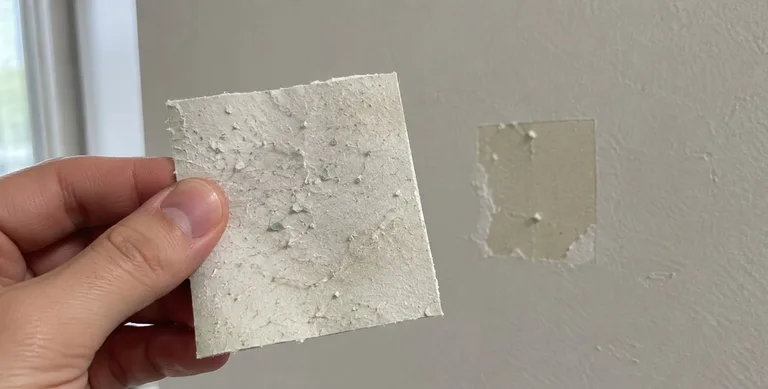
The risk moved somewhere else. The kit is held up by double-sided tape applied to your painted window casing, and when you pull that tape off in April, it can bring paint and sometimes a thin skin of drywall paper with it. This is the same failure I wrote about with peel-and-stick wallpaper on rental walls — the adhesive isn’t the problem, the paint underneath is, especially the flat builder-grade stuff that seems to have been applied with a prayer. Test the tape on a small hidden section of the casing first and leave it a full week before you commit to the whole window.
Kits advertise coverage for “5 standard windows,” which assumes a standard I’ve rarely met in an actual apartment. Measure your widest window and check it against the sheet dimensions before ordering.
Check price on AmazonBlackout curtains on a no-drill rod — the boring answer that works
Somewhere in this research process it’s worth asking whether you need film at all. If the actual goal is a dark bedroom, or privacy after sunset, or less afternoon heat on the west side, heavy blackout curtains on a tension or bracket-clip rod handle all three better than any film does, and they involve zero contact with the glass and zero adhesive anywhere.
Two honest caveats. Curtains are all-or-nothing — drawn, you lose the daylight completely, which is a real cost in a small apartment. And the mounting is the part that determines whether this stays in the low-risk column, which is why I spent a whole article on no-drill curtain rod options and their actual weight limits. Blackout panels are heavy. A tension rod rated for sheers will slide down the casing at three in the morning and take a strip of paint with it.
“100% blackout” on a curtain listing describes the fabric, not the installation. Light comes around the edges on every rod-mounted panel I’ve ever hung. Expect 90% in practice unless you’re running a wraparound track.
Check price on AmazonFreestanding privacy panel — nothing attached to anything
A folding screen or a floor-to-ceiling tension panel set in front of the window. It sounds like a cop-out and in some rooms it is, but for a ground-floor bedroom where the neighbor’s walkway runs six feet from your glass, it solves the problem completely and moves out with you in a car. No adhesive, no tape, no fasteners, no walkthrough conversation.
It eats floor space, which in a studio may be disqualifying, and it looks like a deliberate choice rather than a fix — you have to actually like the object, because it’s furniture now. But of everything on this list it’s the only option with literally no interaction with the landlord’s property, and there’s something to be said for that if you’ve had a deposit dispute before.
Tension-mounted floor-to-ceiling panels rely on your ceiling height falling inside their range and on a ceiling that isn’t textured popcorn. Measure before ordering; the return shipping on these is brutal.
Check price on AmazonApplying it, and getting it off again
The removal half of this matters more than the application half, and it’s the half every product insert skips. Read all of it before you start, because a couple of these steps have to happen in a specific order.
- Photograph every window before anything goes on. All four corners, the edges, any existing chip you found during the glass check. Date-stamped, backed up somewhere that isn’t just your phone. This is the single highest-value five minutes in the whole project, and it’s the evidence that decides a disputed walkthrough.
- Clean with a non-ammonia glass cleaner and a microfiber cloth. Ammonia degrades some film adhesives and can haze certain low-E coatings over time. Get every speck off — anything left under the film shows up as a permanent bump once it’s on.
- For static cling, wet the glass properly. A spray bottle with warm water and two or three drops of dish soap, applied until the pane is genuinely running wet, not misted. Dry application is where the bubbles come from. The soapy layer lets you slide the sheet into position, and it evaporates out through the vinyl edges over a day or two.
- Squeegee from the center outward. Firm overlapping strokes, center to edge, working the water and air out toward the perimeter. Trim the excess after it’s positioned, not before — a fresh razor against a straightedge, cutting away from the frame.
- For adhesive film removal, heat first, always. Hair dryer on medium, held four to six inches from the glass, working a small section at a time until the film goes soft and slightly pliable. Then lift a corner and pull slowly back on itself at a sharp angle, close to 180 degrees rather than straight out. Pulling perpendicular tears the film and leaves the adhesive layer stuck to the glass, which turns a one-hour job into a three-hour one.
- Take residue off with the mildest thing that works. Start with hot soapy water and a plastic scraper. Move to isopropyl alcohol, then to an adhesive remover only if the first two fail. Give whatever you’re using a few minutes to soften the glue rather than attacking it dry.
- Do not put a razor blade or metal scraper on double-pane glass. The interior surface of modern insulated glass often carries a low-E metallic coating, and that coating scratches. Those scratches are visible at an angle, permanent, and completely unarguable at a walkthrough — you can’t clean them off or blame the previous tenant. This is the one step in this article where the mistake is instantly, obviously chargeable.
- Pull shrink-film tape slowly, at a shallow angle, warmed. Same hair dryer, same principle. Peel it back flat against the casing rather than out and away, and stop the moment you feel paint starting to lift — heat that spot more and try again.
- Photograph everything again after removal. Same angles as the before shots. Two sets of matching images is a complete record, and a landlord looking at both is a landlord who releases the deposit.
Where this lands, window by window
Before you order anything dark
Go stand at the window you’re worried about, right now, and look at the edge for a spacer bar. Then check the direction it faces. Those two answers eliminate more bad purchases than anything else in this article, and they take two minutes.
If it comes back double pane and south or west — that’s your answer. Fabric, or frosted cling, or a panel on the floor. Not tint. The film costs twenty-five dollars and the pane costs four hundred, and the gap between those two numbers is the entire reason this page exists.
That tenant with the west-facing crack, the one who left the unit spotless — I think about her file more than almost any other. She hadn’t been careless. She’d been thoughtful. She looked for a solution to a real problem, found a product that a hundred articles recommended, installed it more neatly than most professionals would have, and got handed a bill for it two years later because a mechanism nobody had explained to her was operating quietly in her living room every sunny afternoon.
The film came off clean, incidentally. Perfectly clean, no residue anywhere. It just came off a window that had to be replaced.
Dana managed apartment communities in Ohio and North Carolina for five years, where part of the job was walking units after move-out and calculating what came out of the deposit. She rents now, and writes about making a rental feel like yours without paying for it on the way out. More about this site.