Renter Friendly Shelves: What Actually Stays on the Wall
This post contains affiliate links — full disclosure at the end.
I want to tell you about a wall I inspected in Columbus.
The tenant had done everything right, or so she thought. No nails, no anchors, no drilling. She’d used adhesive shelves — the kind that promise twenty pounds and no damage. Six of them, nicely spaced, holding plants and books and a small speaker.
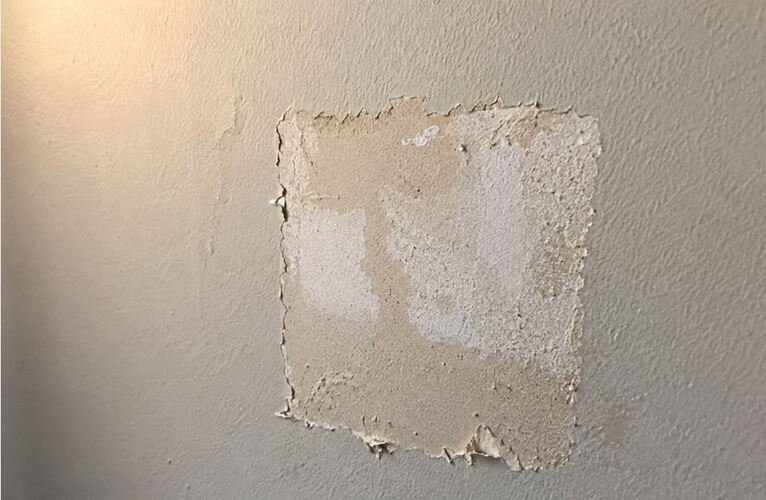
When she took them down, four came off clean. Two took the paint with them. Not a chip — a strip, about the size of a paperback, right down to the drywall paper. And because it was drywall paper and not just paint, we couldn’t touch it up. The whole wall got repainted. Two hundred and forty dollars, off her deposit.
She’d followed the instructions. She’d checked the weight limit. She still lost the money.
So when people ask me about renter friendly shelves, I’ve stopped answering with a product list. The product matters less than you’d think. What matters is the surface you’re sticking it to, how long it’s going to be there, and whether you’ve got a plan for taking it down — which almost nobody does, because who thinks about moving out when they’re just trying to find somewhere to put their books?
Why adhesive shelves fail (it’s not the adhesive)
Here’s the thing that took me too long to understand.
When an adhesive shelf pulls paint off your wall, the adhesive didn’t fail. It worked perfectly. That’s the problem. The bond between the strip and the paint was stronger than the bond between the paint and the wall underneath — so when something had to give, the paint gave.
Which means the real question isn’t “how good is this adhesive.” It’s “how well is your landlord’s paint job attached to the drywall.”
And you have almost no way of knowing that. Cheap flat paint on unprimed drywall in a unit that’s been turned over six times? That paint is barely hanging on. Semi-gloss over a properly primed surface? You could probably hang a bowling ball on it.
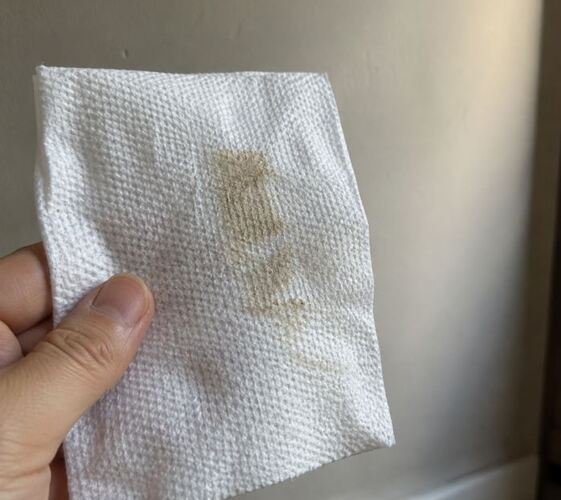
Flat paint is the worst-case surface, and it’s what most landlords use because it’s cheap and hides imperfections. If your walls look chalky and matte and show a mark when you rub them with a damp cloth — that’s flat paint, and adhesive is a gamble on it.
Satin or semi-gloss walls (slightly shiny, wipe clean easily) hold up dramatically better. Bathrooms and kitchens usually get the better paint. Bedrooms and living rooms usually don’t.
So before you buy anything, go press your thumb against the wall you’re planning to use. Rub a damp cloth on an out-of-the-way corner. If color comes off on the cloth, stop reading the shelf reviews and skip to the freestanding options further down. I’m serious about this.
The best renter friendly shelves, by deposit risk
I’ve sorted these by risk rather than by quality, because I think that’s the more useful axis. A shelf that’s perfect in every way but pulls paint isn’t a good shelf for a renter. It’s a good shelf for a homeowner.
| Type | Best for | Real weight limit | Deposit risk |
|---|---|---|---|
| Freestanding ladder shelf | Books, plants, anything heavy | Whatever the shelf holds | Low |
| Tension pole shelving | Corners, narrow gaps, renters who want height | 15–30 lbs per tier | Low |
| Over-the-door rack | Bathrooms, pantries, entryways | 10–20 lbs | Low |
| Magnetic fridge shelf | Spices, foil, kitchen overflow | 5–8 lbs | Low |
| Adhesive shelf on tile or glass | Bathrooms, shower walls | 5–10 lbs | Low |
| Corner shelf floor lamp | Dead corners, small living rooms | 5–10 lbs per tier | Low |
| Adhesive shelf on painted drywall | Light decor only | Half the stated rating | Moderate |
| Heavy-duty adhesive mounting | Nothing, honestly | Don’t | High |
What’s the safest renter friendly shelving option?
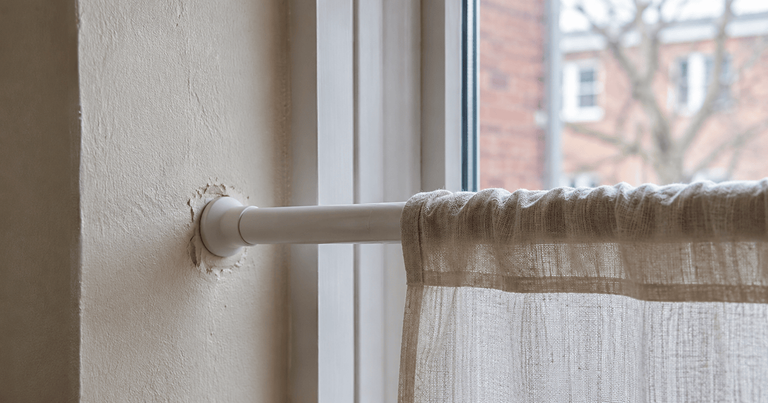
A freestanding ladder shelf is the safest option, because it never touches the wall at all — no adhesive, no anchors, nothing to remove. If you need wall space rather than floor space, a tension pole system is the next safest: it braces between floor and ceiling using pressure, not fasteners, and leaves nothing behind but a faint pressure mark that wipes off.
1. Freestanding ladder shelf
The one that solves the problem by ignoring it
VASAGLE 5-tier leaning ladder shelf
I know. You wanted floating shelves and I’m handing you furniture. But hear me out for a second.
Every single deposit deduction I ever wrote for shelving came from something attached to a wall. Not once — not one time in five years — did I charge anyone for a bookshelf. A leaning ladder shelf gives you five tiers of vertical storage, takes up about fourteen inches of floor depth, and the only thing you have to do when you move is pick it up and carry it out.
The trade-off is real: it eats floor space, and it doesn’t work in a hallway or behind a door. But if you’ve got a blank wall in a living room or bedroom, this is the version of the problem with no downside. And unlike everything else on this list, it holds actual weight. Books. Records. A cast iron pan collection, if that’s your thing.
2. Tension pole shelving
Wall storage without a wall
BAOYOUNI floor-to-ceiling tension shelf
This is the one I’d point you toward if the ladder shelf doesn’t fit your space.
The design is simple: a pole (or two) braced between your floor and ceiling by spring pressure, with shelves that clamp on wherever you want them. It’s popular in Japanese apartments for exactly the reason it should be popular here — small units, strict leases, nowhere to drill.
Two honest caveats. First, you need a hard ceiling; these don’t work under drop ceilings or on very soft plaster. Second, the pressure pad can leave a faint circular mark on both floor and ceiling after a year or two. It wipes off with a damp cloth about ninety percent of the time. The other ten percent it needs a magic eraser, which is a thing you should own anyway.
3. Over-the-door shelf rack
The most underrated square footage in your apartment
Delamu 6-tier over-the-door organizer
Doors are the one surface renters almost never think about, and they’re free real estate.
An over-the-door rack hangs on hooks that go over the top edge. Nothing is fastened. Nothing is stuck. You lift it off and the door looks exactly like it did. In a bathroom this is where your towels and toiletries go; in a kitchen it’s the pantry door and it holds an alarming number of cans.
One thing to watch: the hooks sit between the door and the frame, so a thick rack can stop the door closing flush. Measure your gap first. And if the door is hollow-core — most interior doors are — keep it under twenty pounds or you’ll warp the top edge over time. Warped doors do get charged.
4. Magnetic fridge shelf
Small, cheap, weirdly satisfying
HuggieGems magnetic spice rack (4-pack)
This one’s minor and I almost left it out. But rental kitchens are usually terrible, and the side of the fridge is a vertical surface nobody uses.
Spices, foil, plastic wrap, the small stuff that clutters a counter. It holds maybe six or eight pounds and it sticks with magnets, which means the risk of damage is functionally zero. Only works if your fridge is actually magnetic — a lot of stainless finishes aren’t, which is worth testing with a fridge magnet before you order.
5. Adhesive shelf — on tile or glass only
Where adhesive actually belongs
YASONIC adhesive shower caddy (6-pack)
Everything I said earlier about adhesive was about painted drywall. Tile is a completely different situation.
Glazed tile and glass have no coating to pull off. The adhesive bonds to a sealed, non-porous surface, and when you remove it with a bit of heat and dental floss it comes away clean, leaving residue you can wipe off. In five years of inspections I never once charged anyone for adhesive damage on tile.
So the bathroom is where you use these. Shampoo, razors, a plant that likes humidity. Keep it under ten pounds and give it the full seventy-two hours to cure before you load it — that curing time is not marketing, it’s chemistry, and people ignore it constantly.
6. Corner shelf floor lamp
Two problems, one object
Brightech Maxwell shelf floor lamp
Rental lighting is almost universally bad — one sad ceiling fixture, maybe a fan with a bulb in it. And corners are dead space in every apartment I’ve ever been in.
These units stack three or four small tiers around a floor lamp pole and tuck into a corner. It’s not going to hold your book collection; the tiers are small. But for a plant, a lamp, a speaker, and the place where your keys live, it works, and it fixes the lighting at the same time. Some have USB ports built into the base, which sounds gimmicky until you’re sitting on a couch with no outlet nearby.
7. Adhesive shelf on painted drywall
The one everyone wants, with conditions
Command Picture Ledge
This is what you came here for, probably. Floating shelves that look like real shelves, no drilling, no landlord conversation.
They can work. But halve whatever the box says. If it claims twenty pounds, treat it as ten — that rating comes from a lab test on a primed, cured, ideal surface, and your apartment is not that. Distribute weight across the whole shelf rather than piling it on one end, because the failure mode is the top edge peeling forward and once it starts it doesn’t stop.
And do the damp cloth test first. If the paint marks, don’t. If it’s satin or semi-gloss and the wall’s in good shape, you’re probably fine — but you’re accepting a real, non-trivial chance of a repaint charge, and you should know that going in rather than finding out on move-out day.
8. Heavy-duty adhesive mounting — skip this one
The category that costs people the most money
Heavy-duty mounting tape (e.g. Scotch-Mount Extreme)
I said in my about page that sometimes the answer is don’t. This is that.
These products market themselves on strength — fifty pounds, permanent bond, holds anything. And they do. That’s precisely the problem. The stronger the adhesive, the more certain it is that when you remove it, the wall comes with it. Not a strip of paint. A chunk of drywall paper, sometimes the gypsum underneath.
Paint touch-up is cheap. Drywall repair is not. The worst single deduction I ever wrote for a wall-mounted item was heavy-duty tape holding a mirror — three hundred and eighty dollars for patching, sanding, priming and repainting one wall, and the tenant genuinely had no idea it could go that way.
If you need to hang something that heavy, use the floor. Really.
How to take them down without losing money
This is the part almost nobody plans for, and it’s where the money actually goes. If you’ve got adhesive anything on your walls right now, this section is the one to save.
- Start early, not on moving dayDo this a week before you move, not the morning of. Rushing is how paint comes off. If something does go wrong you want time to fix it, and you want the option of buying a small can of matching paint.
- Warm it up firstA hairdryer on medium, held a few inches away, for thirty to sixty seconds along the adhesive line. Heat softens the bond so it releases instead of tearing. Skipping this step is the single most common mistake.
- Pull down and slow, never outMost adhesive strips are designed to release when stretched parallel to the wall. Pull the tab straight down, slowly, keeping it flat against the surface. Pulling outward is what levers the paint off.
- Use dental floss for anything without a tabSlide unwaxed floss behind the shelf in a sawing motion. It cuts the adhesive rather than stressing the wall. Sounds like a hack. It’s what professionals do.
- Clean the residue with oil, not solventA little cooking oil or a citrus adhesive remover on a cloth, left for a minute, then wiped. Harsh solvents strip paint — you’d be fixing a small problem by creating a bigger one.
Don’t panic and don’t touch it up with the wrong white — mismatched paint reads worse than the damage and looks like you tried to hide something. Landlords notice that, and it colors how they read everything else in the unit.
Take a photo, get a paint chip matched at a hardware store, and fix it properly. Or tell your landlord before the inspection. Being upfront about a small repair is genuinely cheaper than being caught covering one up.
What I’d actually do
Holds real weight, zero risk, no thinking required.
Wall-height storage with nothing attached to the wall.
The one place stick-on shelves are genuinely safe.
Short stays are when adhesive is least worth the gamble.
Go rub a damp cloth on your wall in an out-of-the-way spot. If color transfers to the cloth, your walls are flat paint on drywall and adhesive is a coin flip. That thirty-second test tells you more than any product review — including this one.
The tenant in Columbus, by the way — she asked me afterward what she should have done. I told her the ladder shelf answer and she looked at me like I’d cheated. She’d wanted the clean floating look, and I’d handed her furniture.
But she’d also just paid two hundred and forty dollars for the clean floating look, which is more than the shelf would have cost. That math is the whole point of this site.
Dana Whitfield
Five years of move-out inspections taught me which rental changes get charged and which ones nobody notices. Now I write about upgrading a rental without losing your deposit. More about me →